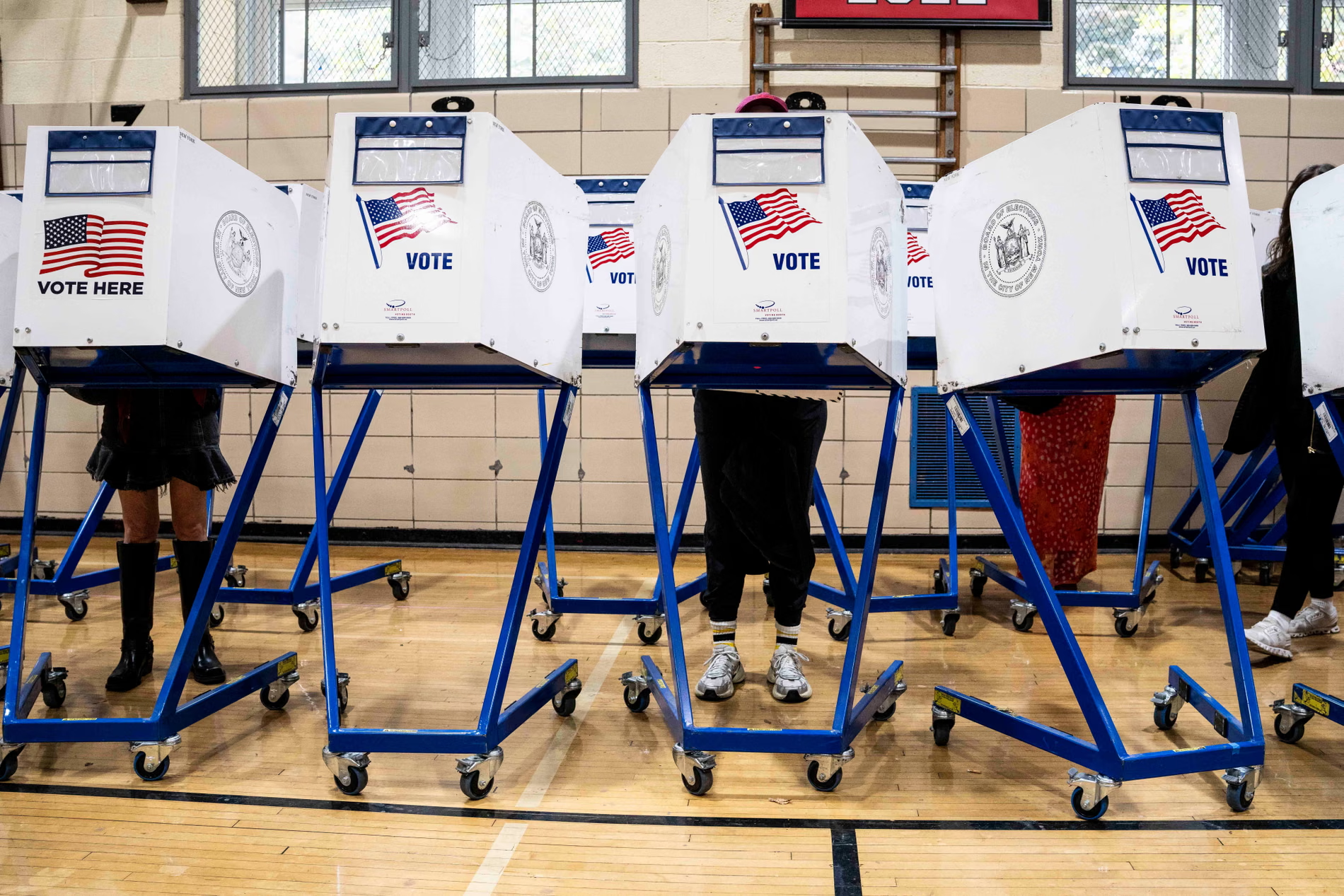
The votes are in. The campaigns are over. But for communities across Ohio, the conversations are far from finished.
The Nov. 3 election brought significant changes to Ohio's political landscape, consequential decisions about local government and new attention on how communities grow, invest and make decisions.
At MurphyEpson, we spend much of our time helping communities navigate complex issues, build understanding and create opportunities for meaningful public participation.
Here are five takeaways we're thinking about as communities look ahead.
Ohio's races for governor and U.S. Senate attracted significant attention. But further down the ballot, voters made decisions with direct implications for their neighborhoods, schools and local governments.
To name one: in Columbus, voters approved two charter amendments that will change how City Council members are elected and expand the size of council.
Our takeaway: Local governments can't assume residents understand how decisions are made or how those decisions affect their daily lives. Explaining the process – early, clearly and consistently – is essential. We like to call it "Government 101".
Across Ohio, voters weighed in on proposals related to data centers, development and local decision-making authority.
While the outcomes varied, the questions behind these measures reflect a broader conversation about growth: Who benefits? What are the impacts? And how much influence should residents have?
For communities pursuing economic development, these questions can't be addressed through economic impact figures alone.
Residents want to understand what new investment means for infrastructure, public services, neighborhoods and their quality of life.
Our takeaway: Economic development communications must go beyond announcing projects and celebrating investment. Communities need opportunities to ask questions, understand trade-offs and participate in conversations about their future – long before any proposal is received by the city.
Charter amendments. Tax levies. Development regulations. Changes to government representation.
These aren't necessarily easy topics to explain, especially when voters encounter competing interpretations, unfamiliar terminology or incomplete information.
The challenge for public agencies is making that information understandable, relevant and accessible.
That means explaining what a proposal would actually change, what it wouldn't change and what happens next.
Our takeaway: Plain language is a critical component of public engagement. If residents need to become policy experts to understand an issue, there's an opportunity to communicate more effectively.
An election provides a clear opportunity for residents to express their preferences. But it shouldn't be the first time a community hears from them.
Public meetings, listening sessions, stakeholder interviews and informal conversations can help leaders understand concerns before they become points of conflict.
And effective engagement isn't limited to the people who regularly attend council meetings.
We also preach that it means reaching residents where they already are – at neighborhood gatherings, community events, local businesses and – of course – online.
Our takeaway: The strongest engagement strategies aren't built around a single meeting or public comment period. They're ongoing efforts to establish relationships, gather feedback and demonstrate how community input informs decisions.
Many communities are now preparing to implement decisions made by voters.
That next phase matters just as much as the campaign or public discussion that happened first.
Residents will want to know what changes, when those changes take effect and how they can stay involved. Even when an issue is resolved at the ballot box, the underlying questions and concerns may remain.
For public leaders, this is an opportunity to communicate proactively, acknowledge different perspectives and maintain the relationships built throughout the process.
Our takeaway: Public trust is built through transparency, follow-through and consistent engagement over time. And there's one thing we know for certain about public policy: it will change time and time again. So if today is the time to rebuild trust, seize the opportunity.


